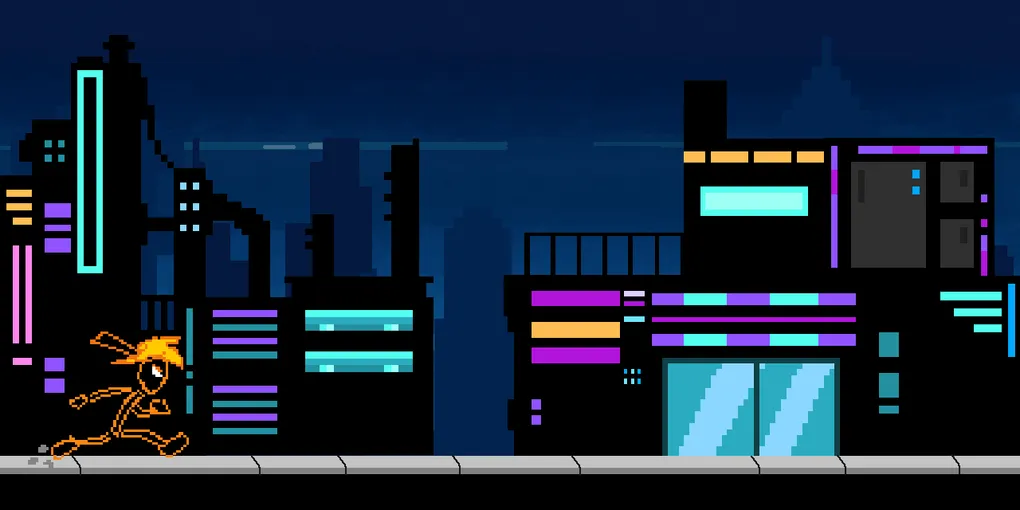
Turning Learning the Violin Bow into an Adventure Game
Sections
Backstory
From reflecting back on my early days of learning the violin, it felt like a chore to repetitively practice bowing exercises my private teacher assigned. The rhythms were too simple to the point it made me want to fall asleep. I found that other beginner violinists felt the same as I read through online forums for violinists and saw how jaded my fellow classmates seemed during orchestra class.
There was something that almost everyone I knew loved - games.
You know when you were in grade school, it was going to be a fun day when a teacher says “Let’s play a game!” for learning a certain skill related to the subject material. You didn’t even see it as a learning opportunity, you just wanted to win. Something else I noticed with games is that people tend to be immersed in the fictional world. I would play Sonic Mania on my phone and forget that I was waiting for my machine learning models to finish processing data because I was so into getting Sonic to defeat Dr. Robotnik. The games that encapsulated me were specifically adventure games, those that had a plot to follow and multiple levels. Think of Super Mario Bros for example.
That was when I decided to turn a boring exercise to an adventure game.
Studies Behind Games
a) What makes people want to keep playing adventure games?
From Ju and Wagner’s study, these were the reasons why-
- role-playing
- the story
- the plot
- speed of story’s progression
Role Playing
By taking on the role of some other fictional character, they take on the challenges that character faces in the game world. Here, the players use abilities that do not exist in the real-world to problem-solve their way out. In a sense, players escape reality to be in a alternate world for entertainment.
Story + Plot
People love to hear factual information formatted as an organized entity with a clear start, middle, and end. Interestingly, a study from A. Fiske et al. found that stories where heroes overcome a series of challenges to reunite with something/someone. Players also reported that fast-paced stories are better than slower ones.
Applying Gamification into My Program
To keep the users (in this case, grade school music students), I included the following with the respective explanations:
- Simple Storyline
Everyone is familiar with the plot where the hero is separated from their companion because of some antagonist and has to go through a series of missions. The goal is clear - reunite with what was taken away from them.
- Rhythm-based Musical Levels
Moving to the beat of some tune is a natural behavior humans exhibit. Doing this enhances the experience of listening to the music and can even improve students’ sense of rhythm.
- Phyiscal Movement as Controls
Faric et al. found that players enjoyed physical-activity games when they immersed themselves into the game. That is, when their physical movements controlled the player in the game setting. Having players use their fingers/ arm to control the main character’s movements accomplishes this.